About Specifically Formulated Sodium Bentonite Powder
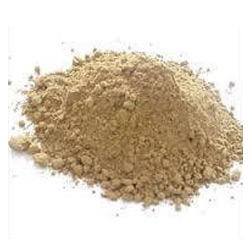
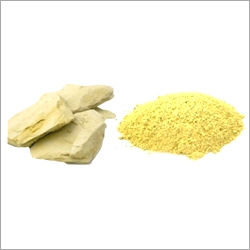
Avail from us supreme grade of Sodium Bentonite Powder that is formed primarily of Montmorillonite, which is an enormously flat sparkler flake that carries a relatively high ionic charge. This powder is used to make sodium clay that is widely used in various industries to describe clay beds of uncertain origin. The offered powder is processed from weathering of volcanic ash, that is mostly present in water. Apart from this, the Sodium Bentonite Powder that we offer is a premium, high-yielding Wyoming sodium bentonite, which contains no added polymer or chemical substance s of any kind.
Superior Swelling and Sealing PropertiesSodium Bentonite Powder offers remarkable swelling when in contact with water, expanding its volume significantly. This property makes it ideal for applications requiring robust sealing, such as pond lining, waterproofing membranes, and foundation protection in civil engineering. Its high cation exchange capacity and purity further enhance its effectiveness in controlling permeability and ensuring long-lasting performance in critical industrial processes.
Consistent Particle Size and High PurityProcessed to particle sizes between 200 and 325 mesh, Sodium Bentonite Powder ensures uniform performance in binding applications like foundry sand and iron ore pelletization. Its high purity (95-98%), and the absence of additives, guarantee minimal contamination and optimal results. Rigorous quality control during mining and mechanical grinding secures a product fit for demanding industrial environments.
Safe, Natural, and Versatile Industrial MineralExtracted from natural sodium bentonite clay, this powder is non-toxic and odorless, making it safer to handle in industrial settings. Its hygroscopic nature enables moisture absorption, while its high pH aids in various chemical and physical industrial processes. Widely used in drilling, animal feed, waterproofing, and as a binding agent, it is both versatile and reliable.
FAQ's of Sodium Bentonite Powder:
Q: How should Sodium Bentonite Powder be stored to maintain its quality?
A: Sodium Bentonite Powder should be stored in a cool, dry place, away from moisture and contaminants. Proper storage helps preserve its swelling and sealing properties, ensuring maximum shelf life, which is up to 24 months.
Q: What are the main industrial uses of Sodium Bentonite Powder?
A: This powder is widely used in drilling mud for oil and gas exploration, as a binder in foundry sand, for waterproofing and sealing applications, in civil engineering projects, for pond sealing, and in iron ore pelletization due to its excellent binding and swelling characteristics.
Q: When is Sodium Bentonite Powder preferred over other sealing materials?
A: Sodium Bentonite Powder is preferred when high swelling capacity, long-term sealing, and superior binding are required, especially in waterproofing, pond lining, and foundation sealing, where it forms an impermeable barrier against liquids.
Q: Where can Sodium Bentonite Powder be applied in civil engineering?
A: In civil engineering, Sodium Bentonite Powder is commonly applied in cut-off walls, slurry trenches, landfill liners, barriers for contaminated sites, and waterproofing of basements, providing reliable containment and impermeability.
Q: What is the recommended process for using Sodium Bentonite Powder in drilling mud?
A: For drilling mud, mix the powder with water according to the specific requirements of the drilling operation. The powder swells and suspends solids, stabilizes boreholes, and prevents fluid loss during drilling.
Q: How does Sodium Bentonite Powder benefit foundry and pelletization industries?
A: Its high binding strength and consistent particle size enable better cohesion of foundry sand and iron ore fines, resulting in improved mold integrity and pellet formation, essential for efficient industrial production.
Q: What makes Sodium Bentonite Powder safe and environmentally friendly for industrial use?
A: Sodium Bentonite Powder is a natural, mechanically processed mineral that contains no additives, is non-toxic, odorless, and has minimal heavy metal content, making it a safe and eco-friendly option for various industrial applications.

 Send Inquiry



 Send Inquiry

 Send Inquiry